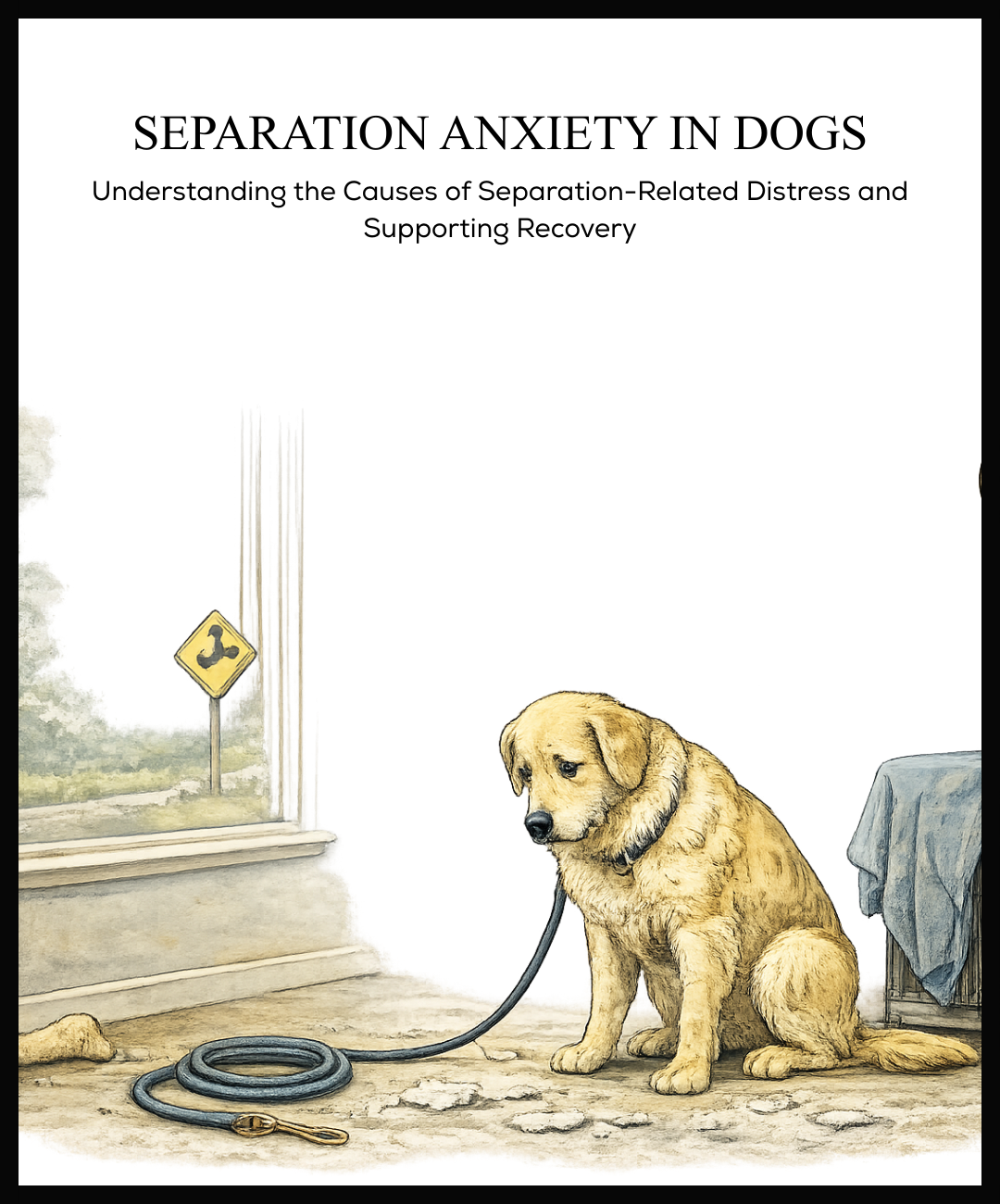
The ACL Separation Anxiety course is an in-depth, welfare-led programme designed to provide the most comprehensive online education available on separation-related distress in dogs. This course moves far beyond surface-level advice, quick fixes, or behaviour suppression, offering instead a scientifically informed, ethically grounded framework for understanding, assessing, and resolving separation anxiety in a way that protects both canine welfare and the human–dog relationship.
Separation anxiety is one of the most misunderstood and mismanaged canine behavioural conditions. Dogs experiencing it are frequently subjected to advice that unintentionally worsens their distress—through forced exposure, punishment, emotional withdrawal, or unrealistic expectations of independence. This course challenges those narratives directly. Separation anxiety is not framed as disobedience, manipulation, or dependence, but as a panic-based emotional condition rooted in biology, attachment, learning history, and nervous system regulation.
The ACL approach places emotional safety at the centre of all intervention. Learners are guided to understand why dogs struggle when left alone, how stress chemistry and attachment systems drive behaviour, and what must change emotionally before absence can ever be tolerated. The course emphasises prevention of distress, careful assessment, sub-threshold learning, and long-term resilience rather than endurance or compliance.
This programme is suitable for dog owners, trainers, behaviour practitioners, rescue professionals, and anyone working with or living alongside dogs affected by separation-related distress. While accessible to committed owners, it is written to a high academic and professional standard, encouraging reflective thinking, ethical decision-making, and evidence-informed practice throughout.
Who This Course Is For
This course is ideal for:
-
Dog owners whose dogs struggle to cope when left alone
-
Owners experiencing guilt, stress, or confusion around separation anxiety
-
Professional dog trainers seeking a welfare-led framework
-
Behaviour practitioners wanting deeper biological and emotional understanding
-
Rescue and rehoming professionals supporting vulnerable dogs
-
Anyone wishing to move away from outdated or harmful advice
No prior qualifications are required, but learners should expect detailed content, reflective exercises, and a strong emphasis on ethical responsibility.
What Makes This Course Different
Unlike many separation anxiety courses that focus primarily on time-based absence training, this ACL programme is emotion-first and biology-informed. It recognises that dogs cannot learn when panicking and that resolution depends on nervous system safety rather than exposure.
Key distinguishing features include:
-
A clear rejection of punishment, flooding, and forced independence
-
Detailed exploration of canine stress chemistry and panic responses
-
Attachment-led understanding of emotional vulnerability
-
Emphasis on assessment before intervention
-
Recognition of silent distress and shutdown behaviours
-
Practical, owner-usable tools that prioritise observation and reflection
-
Long-term maintenance and relapse prevention guidance
-
Support for both dog and human emotional experience
Course Structure & Modules
Module 1: What Separation Anxiety Really Is (and What It Is Not)
Introduces separation anxiety as a panic-based emotional condition, dismantling common myths and clearly differentiating it from boredom, disobedience, or poor training. Learners gain a precise, welfare-led definition that underpins the entire course.
Module 2: Attachment, Bonding & Emotional Development in Dogs
Explores how dogs form emotional bonds, how regulation develops, and why secure attachment is protective rather than problematic. This module reframes “over-attachment” myths and explains vulnerability without blame.
Module 3: The Canine Stress Response, Panic & Emotional Dysregulation
A deep examination of how stress, anxiety, and panic operate within the canine nervous system. Learners explore why panic cannot habituate, how stress chemistry affects learning, and why emotional regulation must precede training.
Module 4: Recognising the Full Spectrum of Separation-Related Behaviours
Covers both overt and subtle signs of distress, including silent suffering and shutdown. Learners are trained to recognise patterns, timing, escalation, and recovery rather than relying on stereotypical behaviours.
Module 5: Assessment, Case History & Ethical Diagnosis
Guides learners through accurate assessment, ethical diagnosis, severity evaluation, and differentiation from similar conditions. Emphasises the role of case history, video evidence, and professional boundaries.
Module 6: Why Traditional Advice Makes Separation Anxiety Worse
Critically examines common advice such as “cry it out,” ignoring distress, punishment, forced independence, and flooding. Learners understand why these approaches fail biologically and emotionally.
Module 7: Building Emotional Safety Before Absence Training
Focuses on stabilising the dog’s emotional world before any absence work begins. Covers baseline stress reduction, predictability, environmental support, and the human role in regulation.
Module 8: Graduated Absence Training & Ethical Desensitisation
Provides a detailed framework for sub-threshold absence training, including threshold identification, non-linear progression, consolidation, and real-time observation. Emphasises emotional neutrality over duration.
Module 9: Managing Setbacks, Progress Plateaus & Real-Life Constraints
Supports learners in navigating setbacks, plateaus, and unavoidable absences without undoing progress. Reframes regression as information and stability as success.
Module 10: Long-Term Maintenance, Relapse Prevention & Life Changes
Focuses on sustaining progress across life changes, recognising early warning signs, supporting ageing or unwell dogs, and maintaining emotional safety long-term.
Additional Course Materials & Practical Tools
This course includes extensive supplementary resources to support learning and real-world application, including:
-
Precursor Observation Sheets to identify early vulnerability signs
-
Owner Understanding & Reflection Worksheets
-
Daily and Weekly Progress Trackers
-
Visual Progress Scale with Example Behaviours
-
Setback and Recovery Logs
-
Step-by-Step Ethical Training Guides
-
Owner-facing educational tools to reduce guilt and increase clarity
These materials are designed to be practical, printable, and usable by both owners and professionals.
What You Will Learn
By the end of this course, learners will be able to:
-
Accurately identify separation anxiety and related conditions
-
Understand the biological and emotional drivers of distress
-
Assess severity and risk ethically
-
Prevent panic exposure and reduce baseline stress
-
Design and implement ethical absence training plans
-
Recognise and respond to setbacks appropriately
-
Support dogs through routine changes and life transitions
-
Maintain progress long-term without fear-based methods
-
Advocate for welfare-led, evidence-informed practice
Course Outcome
Learners completing the ACL Separation Anxiety course will leave with more than techniques. They will have a clear ethical framework, a deep understanding of canine emotional experience, and the confidence to support dogs compassionately and effectively through one of the most challenging behavioural conditions.
This course equips learners to change not just behaviour, but emotional outcomes—strengthening trust, preserving welfare, and improving quality of life for both dogs and their families.